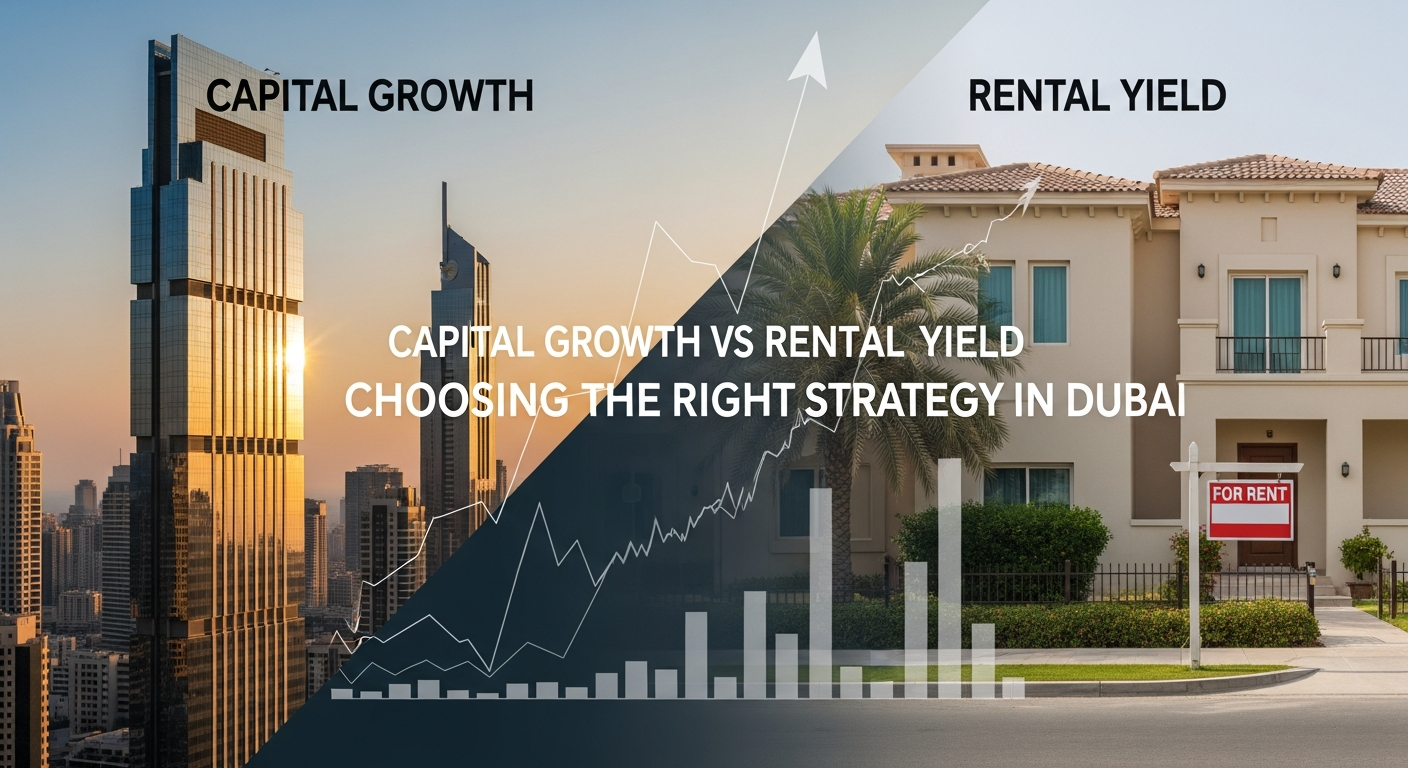
The property market in Dubai is large enough to provide many options to property investors whether you are looking at a high end luxury waterfront apartment or an affordable residential community with long-term tenant potential. Any investor will have to decide which strategy to pursue: Capital Growth (which includes investment in property as a form of asset that will appreciate in value) versus Rental Yield (which provides cash flow through rent). While both types of investments can be successful, each serves a completely different financial purpose.
Understanding Capital Growth vs Rental Yield in Dubai Real Estate

The comparison between a property’s capital growth and rental yield is an important part of every real estate decision made by a property investor in Dubai. As more and more new buildings are being built within the established and newly developing neighborhoods of Dubai, many property investors are trying to decide if they should invest in a property that is expected to grow in value (capital growth) versus a property that will provide them with a steady source of income through rent (rental yield). By understanding the difference in these strategies and how they work, it may be easier for the buyer to determine which type of property is best suited to their long-term financial goals.
What Capital Growth Means for Dubai Property Investors
Capital Growth refers to an increase in the value of a property over time. Typically, those who pursue a strategy focusing on capital growth acquire properties in regions which are expected to be more attractive in the future. The construction of new infrastructure (roads, bridges etc.) as well as improvements to public transportation systems and the expansion of commercial areas have led to increased long-term appreciation of property.
Urban development areas will attract buyers seeking capital appreciation. As a result of the opening of a new metro station or a large commercial center in the vicinity, the price of properties in the area also tend to rise. Therefore, when considering capital growth versus rental yield, it generally favors those investors who intend to retain the property for at least several years until the value of the property appreciates.
There are many neighborhoods in Dubai which have historically experienced high capital growth. Neighborhoods adjacent to business centers, water front development projects and luxury lifestyle destinations are examples of communities with increasing demand and therefore increasing property values. Those investors pursuing this strategy will likely be willing to accept reduced rental income initially; as they are primarily interested in long-term appreciation of the asset.
That being said, capital growth does require patience and knowledge of local markets. The value of property can vary based upon the overall state of the economy, the number of available properties and the amount of demand from potential buyers. Those investors who evaluate capital growth versus rental yield should first determine how long they expect to own the property before determining if they are prepared to wait for the property to appreciate.
How Rental Yield Generates Immediate Income
Rental yield annual rental income / purchase price of property. The income investor will typically seek a property with stable cash flow from tenants.
The mid-range residential communities are strong areas of demand for rentals because they provide long term housing opportunities for professionals, families and expats.
These properties generally offer steady rental returns at lower entry prices than other types of properties which make them attractive to income-oriented investors.
Rental yield provides predictable returns; capital growth does not. When evaluating whether to invest in capital growth or rental yield, many buyers see rental yield as the more predictable option.
A property that generates regular rental payments can produce steady returns even if short-term appreciation is slow.
This strategy is suitable for investors who want consistent cash flow rather than waiting for long-term appreciation.
Dubai’s diverse population also supports rental demand across different segments.
Properties located near business districts, universities, public transportation hubs etc. Often have high occupancy levels.
Investors comparing capital growth with rental yield often select these locations when rental income is their main priority.
Factors That Influence Property Strategy in Dubai

The decision to choose either capital growth or rental yield is never easy. There are many elements that will determine which type of investment strategy works best for each individual investor.
Financial objectives of investors is one of the most significant elements when making a decision on whether to invest in a capital growth property or a rental yield property. Many investors are looking to generate long-term wealth through asset ownership that will increase in value over time. Other investors are looking to generate an immediate source of income through a rental property to help supplement their current income.
Location is another very important element to consider when deciding between investing in a property with strong capital growth and/or high rental yields. Waterfront luxury communities tend to have strong appreciation opportunities however, there is generally little rental yield as compared to the cost of the property. On the other hand, less expensive residential districts will generally produce higher rental yields due to the fact that the cost of the property is lower.
Timing of entry into the market is also an important element to consider. Investors who are able to enter the market early (i.e., while an area is still being developed) may experience greater capital appreciation in the future than those who purchase properties in areas that are already well-established. Additionally, investors who purchase completed units in established neighborhoods may focus on generating rental income since the community is already built-out.
Lastly, how an investor finances his/her/their property will also dictate which type of investment strategy to pursue. For example, if an investor purchases a property utilizing a mortgage, they will likely seek out properties that generate rental income to help assist them in meeting their monthly loan obligations. Conversely, if an investor is purchasing a property “all-cash”, they may be willing to wait for the long-term appreciation of the property’s value.
Popular Dubai Areas for Capital Growth
Communities in Dubai that exhibit a high degree of long-term growth in residential property values include Dubai Creek Harbour, Dubai Hills Estate, and Business Bay. These communities have attracted large numbers of real estate investors seeking to capitalize on anticipated long-term gains in the value of their properties. The areas of Dubai Creek Harbour, Dubai Hills Estate, and Business Bay also offer residents access to large-scale developments and amenities including retail space and lifestyle options.
International investors, particularly those with limited knowledge of local market conditions, tend to favor investing in communities where they anticipate long-term appreciation in property value over the long-term income potential (rental yields) of their investments. As these communities continue to grow and be developed, demand tends to increase and new business development is established, which ultimately contributes to increased property value.
Communities Known for High Rental Yield
Jumeirah Village Circle, International City, and Dubai Sports City are examples of some of the Dubai neighborhoods that consistently have better rental performance than many of the other parts of the city. As a result of their affordability, proximity to major business districts, and access to public transportation, they tend to be popular with tenants seeking reasonably priced housing. These types of investments, while generally not offering high yields relative to the cost of the investment, can be attractive to investors who prioritize the potential for long-term capital appreciation over the desire for regular rental income.
Balancing Capital Growth and Rental Income
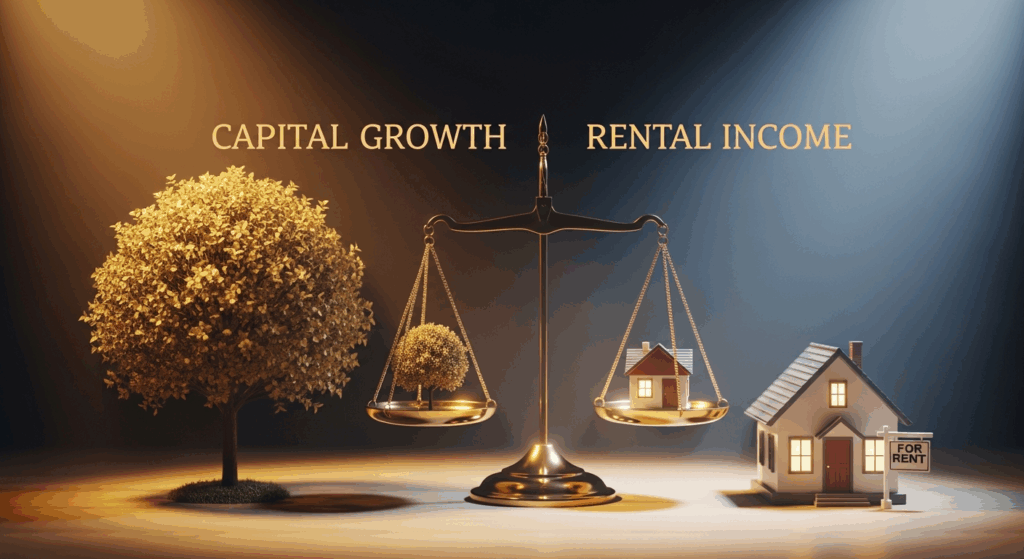
Many seasoned investors understand that when comparing capital gain to rental returns, an investor doesn’t have to choose either/or. Within some neighborhoods, there are investment opportunities that combine both a chance for increased value and a stable rental income opportunity.
For example, in many new residential developments there is a large number of potential renters as well as those looking to buy their own home. Over time, as the neighborhood continues to grow and the local infrastructure and amenities develop, home prices will appreciate while at the same time continue to draw renters. Those investors who can identify areas such as this before they become mainstream, will be able to take advantage of both the rental income and the long term appreciation in value.
Insights From the Experts
In order to assist investors in making informed investment decisions at e Keyspace Realty and Keyspace Dubai, we constantly monitor the trends of the Dubai property market. We then utilize this information to help investors identify the best areas for investing based on whether a particular area will be able to generate rental income versus appreciation in value. As we continue to study the current market conditions, the potential demand for rentals, and the plans for new developments, we are able to offer guidance to investors to aid them in their evaluation of the income-generating capacity of an area as well as its long-term appreciation. With our knowledge of the current market trends, investors can determine which areas have a high rental demand and also have the ability to grow in the future, thus providing them with the opportunity to make educated decisions regarding their real estate investments.
Conclusion
With the growing number of investors worldwide looking at purchasing real estate in Dubai because of it’s favorable business environment, good global connections and well established infrastructure; investors have to determine what they want out of their purchase. Investors seeking long term gains are typically going to focus on capital appreciation when investing in emerging markets or premium areas.
While those who are seeking income will be looking for a property that generates steady rental income from tenants. Ultimately, understanding the difference between capital growth versus rental yield will allow investors to choose an investment strategy that is aligned with their personal financial objectives, level of risk and investment horizon.
Frequently Asked Questions
What does capital growth vs rental yield mean in real estate?
Capital growth represents the appreciation in a property’s value as time passes. Rental Yield reflects how much rent is earned each year compared to the original cost of purchasing the property.
Which strategy is better in Dubai, capital growth or rental yield?
The decision to favor one or the other will depend on what you are looking to achieve financially through your investment. Do you want long-term appreciation in the property’s value (capital growth) or consistent monthly/quarterly rental income (rental yield)?
Can a property provide both capital growth and rental yield?
Yes, some properties in emerging communities may be able to appreciate in value as well as provide consistent rental income.
Why does location matter in capital growth vs rental yield decisions?
Different neighborhoods within Dubai appeal to different types of buyers and tenants. Neighborhoods that have experienced recent price increases tend to also generate higher rents.
Is Dubai a good market for rental income?
Dubai has many attributes that make it a good place for rental income. A very high percentage of residents in Dubai are expats who are required by their employer to live in company-provided housing. However, these companies frequently allow employees to find private rentals in order to accommodate their lifestyle choices.
NOTE: Pictures used in the advertisement are for illustration purposes only.