
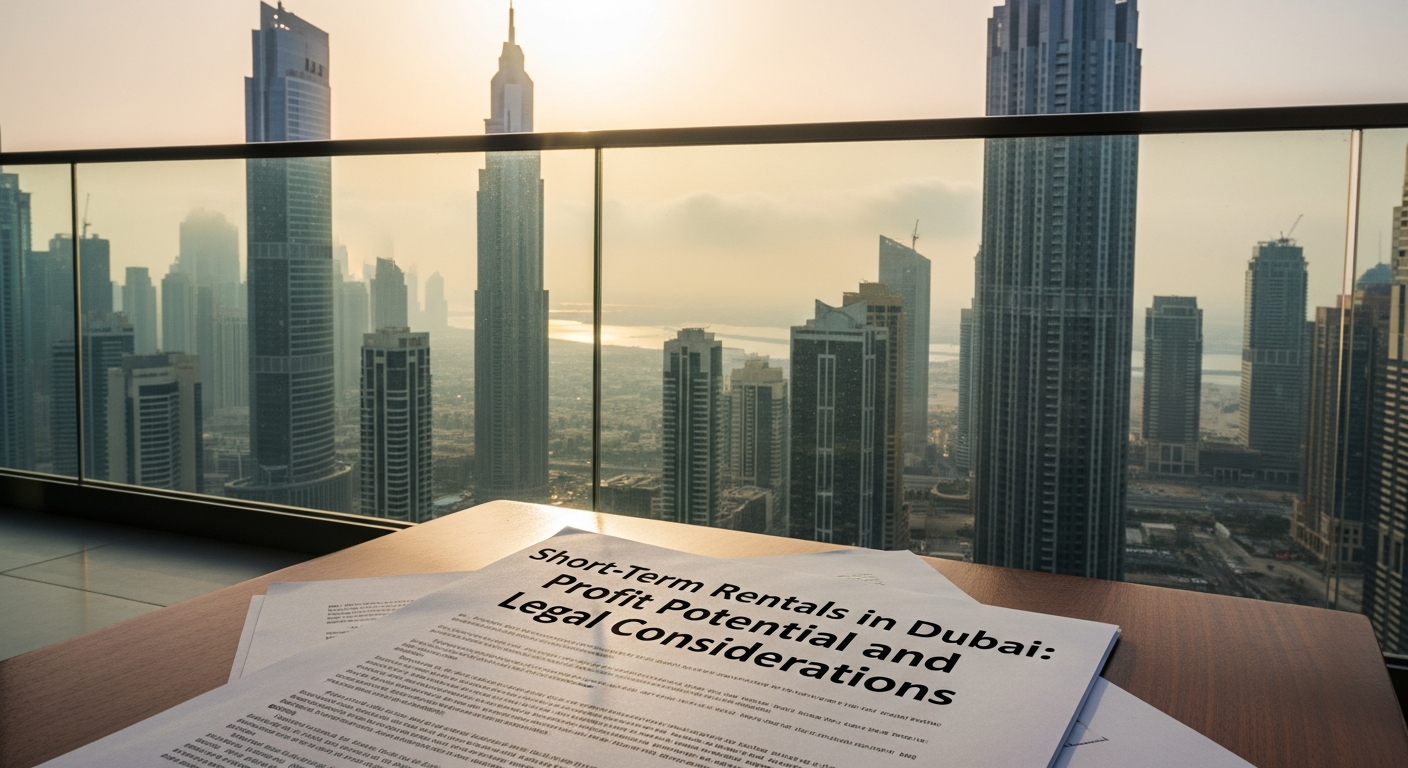
Dubai is establishing itself as an international destination for leisure and business travel along with longer stay travelers; therefore, it will be natural that there would be increased demand for vacation rental properties. The trend in the area is toward investment in short term rentals by investors who wish to earn higher returns than they could through long term leases. Because of the high volume of tourist traffic going to areas such as Downtown Dubai, Dubai Marina and Palm Jumeirah, occupancy levels tend to remain high for much of the year, particularly during peak periods.
Understanding the Profit Potential of Short Term Rentals in Dubai

Flexibility is another key advantage of short term rentals. Owners may raise their prices during periods of increased demand (such as events) or seasons. As an example, during large events such as Expo- related exhibitions or international conferences, nightly rates for a one bedroom apartment in Dubai Marina can be greatly increased. The same one bedroom unit that would produce a fixed monthly rent through a long-term lease could create greater revenue potential as a short term rental especially during peak demand months.
It should be noted however, there are no guarantees of profit from short term rentals if you do not have a solid plan. The most important aspect to determine the success of your short term rental is the location of the property. Short term rentals typically work best in areas close to main tourist attractions, transportation systems and/or lifestyle hubs. Furthermore, the appearance of the property is crucial for attracting the right type of guest. Units that are clean, furnished and feature modern interior designs will attract more paying guests than unfurnished, poorly maintained units. As with any other commodity, how you present your property is equally as important as where you locate your property; guests regularly compare different options prior to making a final decision on which property they want to book.
The last area to consider regarding earning a positive return on investment is operational efficiency. When renting out properties on a short term basis, the investor needs to consider the time required for cleaning/maintenance, communicating with guests, managing various platforms etc. Many investors find it beneficial to hire third-party professional property management companies to manage all aspects of their short term rental(s). This allows the owner to maintain some level of control over the operation but at a cost. Since hiring a company to provide services can result in reduced profits due to service fees, the majority of owners who hire companies to assist them believe that the benefit of having someone else manage all day-to-day issues for them far outweighs the costs associated with doing so.
Legal Framework and Licensing Requirements

The financial attractiveness of renting out your property for short terms is certainly an enticing one; however, it is crucial that you understand the legal framework governing short-term rental properties in Dubai. The Department of Economy and Tourism in Dubai oversees this area of law and there is considerable clarity in the regulation of this area. A holiday home license will need to be obtained prior to being able to list your property as available for short-term rental purposes. Failure to do so may result in penalties or fines.
Registering your property and providing evidence that it meets safety and quality standards, in addition to demonstrating adherence to local building codes, are all part of obtaining a holiday home license. Additionally, property owners must comply with various guidelines (e.g., registration of guests, reports and taxes) related to the operation of their vacation rental business. For instance, each time a tourist rents a room or apartment in a licensed accommodation, they pay a tourism Dirham tax. This tax goes toward the maintenance of Dubai’s tourism infrastructure and must be properly administered to avoid non-compliance.
Property managers who rent out their properties to tourists also must confirm whether the type of residential property they wish to rent out is permitted under the building regulations of their community. Many residential buildings prohibit renting properties to tourists due to covenants imposed upon the property owners. Therefore, before purchasing a property with the intent of renting it out to tourists, property managers must review all applicable building regulations. If property managers fail to do so, they run the risk of having disputes with property management companies or other entities involved in the management of their rental property. In some cases, if restrictions exist against renting properties to tourists, property managers may be prohibited from allowing others to lease their rental properties.
Lastly, property managers should also take into account that they will likely require adequate insurance coverage. The constant flow of new and different tenants creates a higher probability of accidents occurring within a rented dwelling. Moreover, the higher number of visitors to a residence increases the possibility of theft occurring. By maintaining adequate insurance coverage, property managers are better equipped to manage any potential liabilities associated with renting out their dwellings.
This is especially true when considering investors who plan to manage large numbers of rental properties.
Balancing Risk and Return in a Competitive Market

There are many challenges of investing in the Dubai vacation home market, especially since so many people want to invest in them at this time. The availability of platforms such as Airbnb and Booking.com has lowered the barrier of entry into the market for new vacation home providers. However, because so many additional providers (vacation homes) are entering the market, it will be much more difficult to attract guests to your vacation home. These platforms have created a “curated” expectation from travelers, which includes unique experiences, exceptional interior design, and smooth check-ins. Therefore, you cannot just put your property up for rent on one of these websites; you need to create an experience for your potential guests.
Therefore, if you plan to compete in this space, you must go well beyond typical vacation home rental strategies. Tools that allow you to optimize prices, professional photographers to take pictures of your property, and positive reviews from previous renters are all important factors in getting bookings. Positive reviews of your property can greatly increase your average occupancy rate; negative reviews can rapidly decrease how visible your property is on booking sites. This makes creating a consistent level of quality crucial to maintaining the ability to get bookings consistently.
Seasonality is another important factor when considering renting a vacation home in Dubai. Although Dubai has a large number of tourists throughout the entire year, some months experience increased demand based on both weather and special events. If you know when these periods occur, you can price and market your vacation home strategically during those times. Many travel to Dubai in the winter months when the weather is warmest; therefore, homeowners may be able to command a premium for their vacation home during those periods.
Additionally, as we mentioned previously, there are significant risks associated with vacation home investments including regulatory changes, volatility in the number of visitors to the city, and increased competition from other providers. It is recommended that investors view short-term rental investments as a long-term investment strategy rather than seeking short-term profits.
Strategic Property Insights with the Experts
Short-term rental is viewed at Keyspace Realty and Keyspace Dubai as an opportunity to apply data analysis in order to combine what we know about supply/demand in a particular area (short-stay demand) with our direct experience within each community. For example, we can track occupancy levels, price changes and guest preferences in all major sub-markets across Dubai. As such, we are able to determine which areas have historically produced the most revenue for our investors and where the risk of over-saturation may exist. Ultimately, we want to provide our investors with the best possible strategy based on historical data and current trends so they can confidently make decisions regarding their investment into short-term rental opportunities and fully understand the legal ramifications associated with those investments.
Frequently Asked Questions
What are short term rentals in Dubai?
A short-term rental means that a furnished unit is being rented by tenants for less than six (6) months. The most common use of this type of rental agreement is for guests traveling into Dubai. The length of time can vary greatly depending on the needs of the traveler.
Do I need a license for short term rentals in Dubai?
Yes, to advertise your property as available for a short-term rental, you will need to acquire a Holiday Home License from the Department of Economy and Tourism in Dubai.
Are short term rentals more profitable than long-term leases?
Yes, you may consider renting your property as a short-term rental.
Can any property be used for short term rentals?
No. Not every building has allowed short-term rentals. Each community is different and each building owner is different. It’s best to contact your Property Manager first.
How can I increase bookings for short term rentals?
Depending upon the demand in the area, yes. Your ability to generate revenue through either method depends entirely on how frequently you rent your unit and what price you charge per night, plus any other expenses associated with managing the unit.
NOTE: Pictures used in the advertisement are for illustration purposes only.